
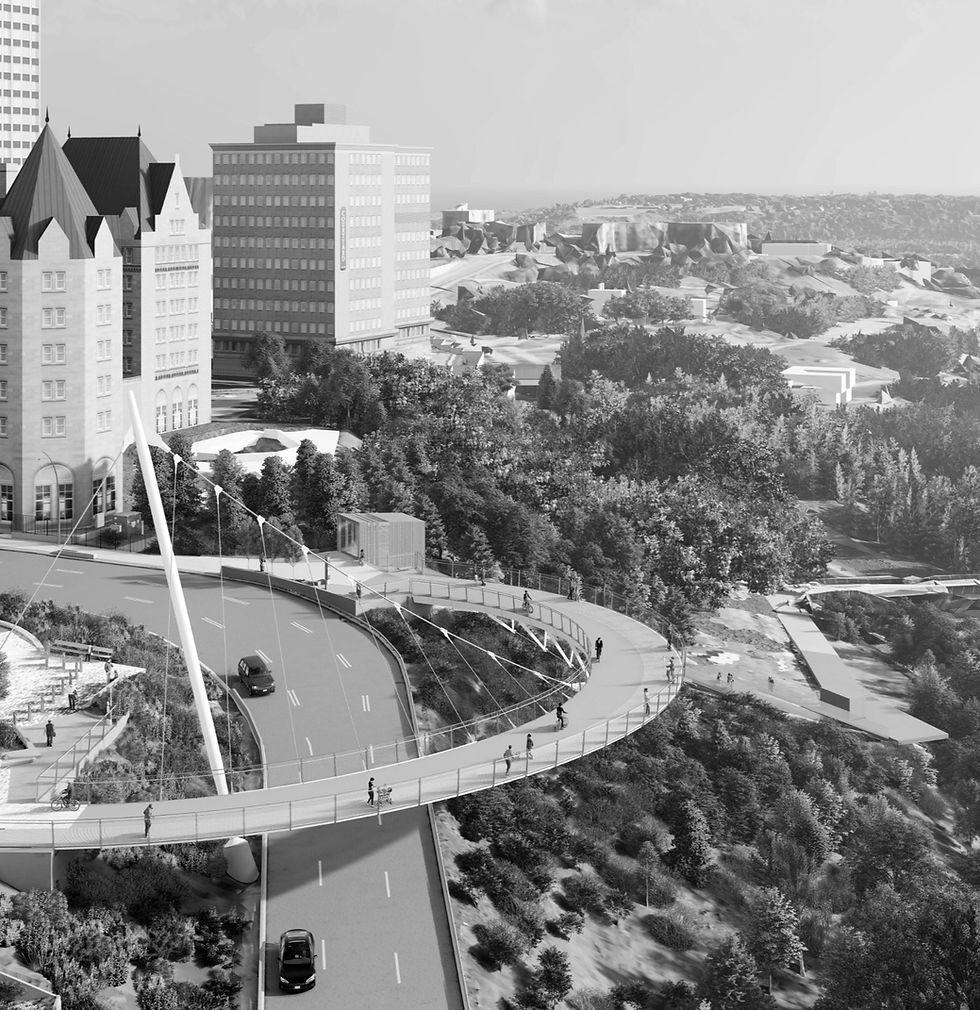
stal̕əw̓asəm (Riverview) Bridge Panel Overview – Modular Design and Construction
Pattullo Bridge Replacement Project
Stal̕əw̓asəm Bridge
Cost: $1.637 billion
Construction schedule: 2020-2026
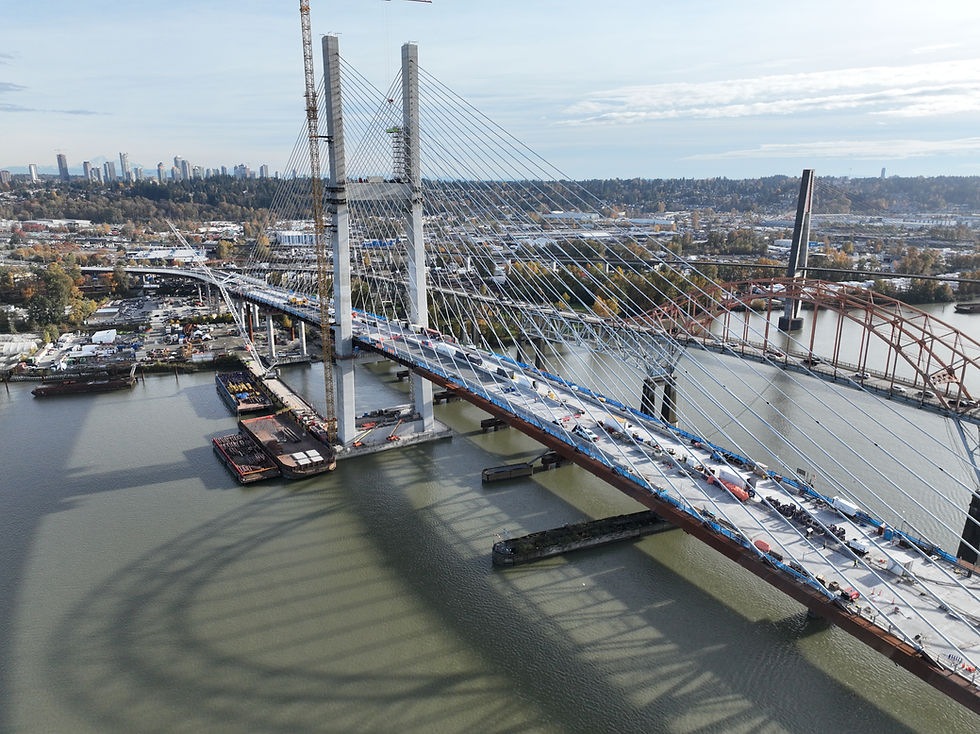
Build type: Four-lane cable-stayed bridge
Location: Surrey and New Westminster, connecting over the Fraser River
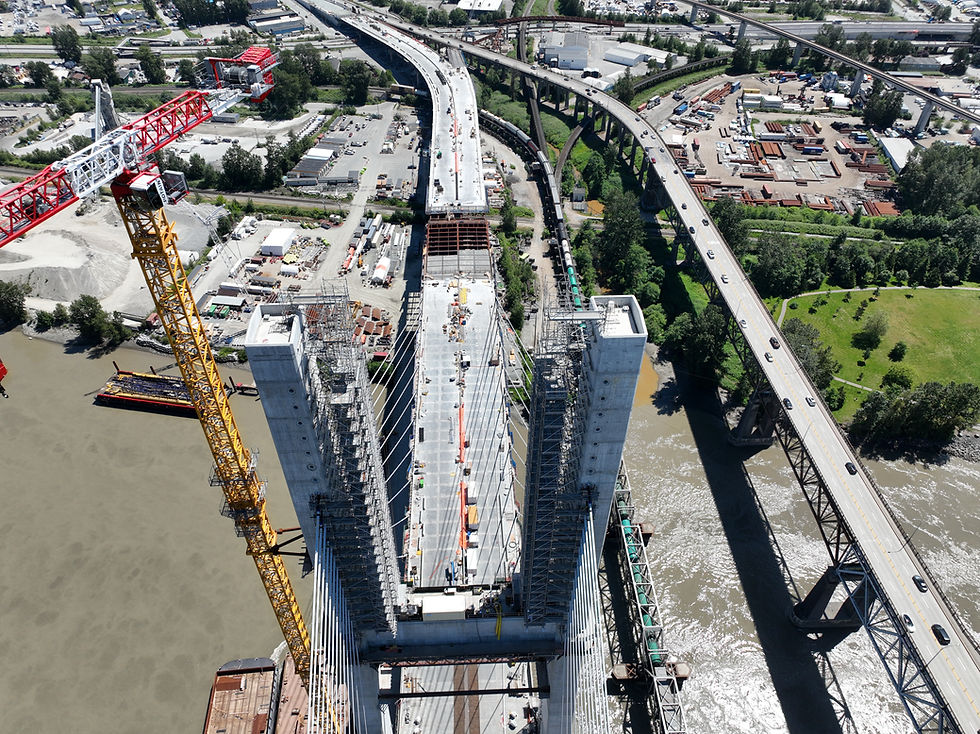
Dimensions: 167-metre tall tower; 1.2 kilometre length; 10 land piers, 2 in-river piers
Key features: 2,500+ prefabricated precast deck panels; Wider lanes; Centre safety median barrier
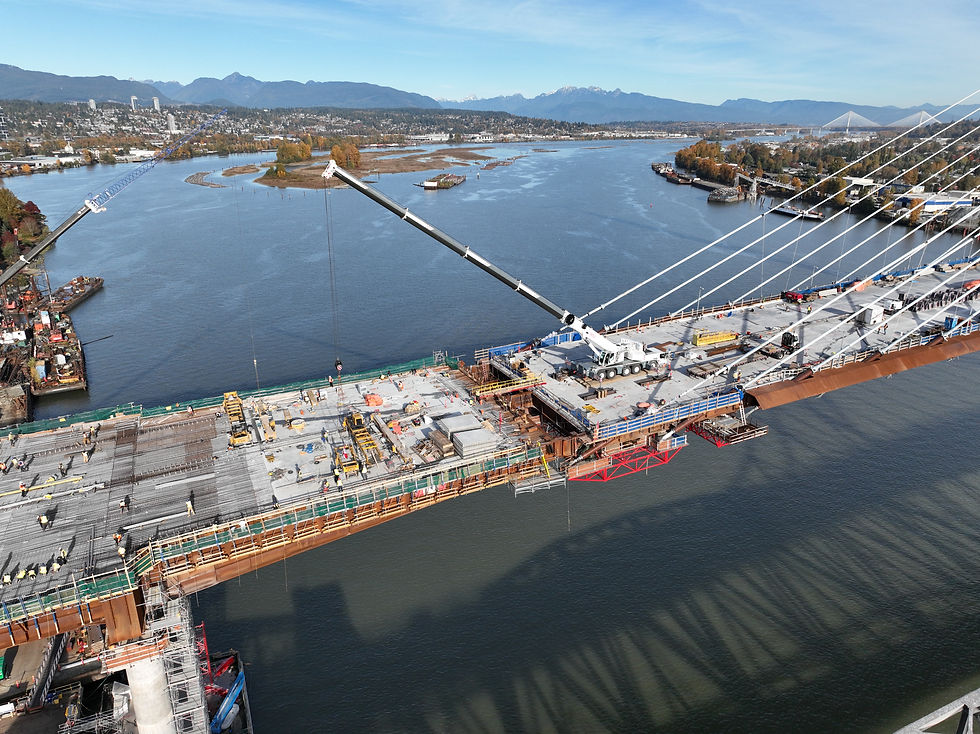
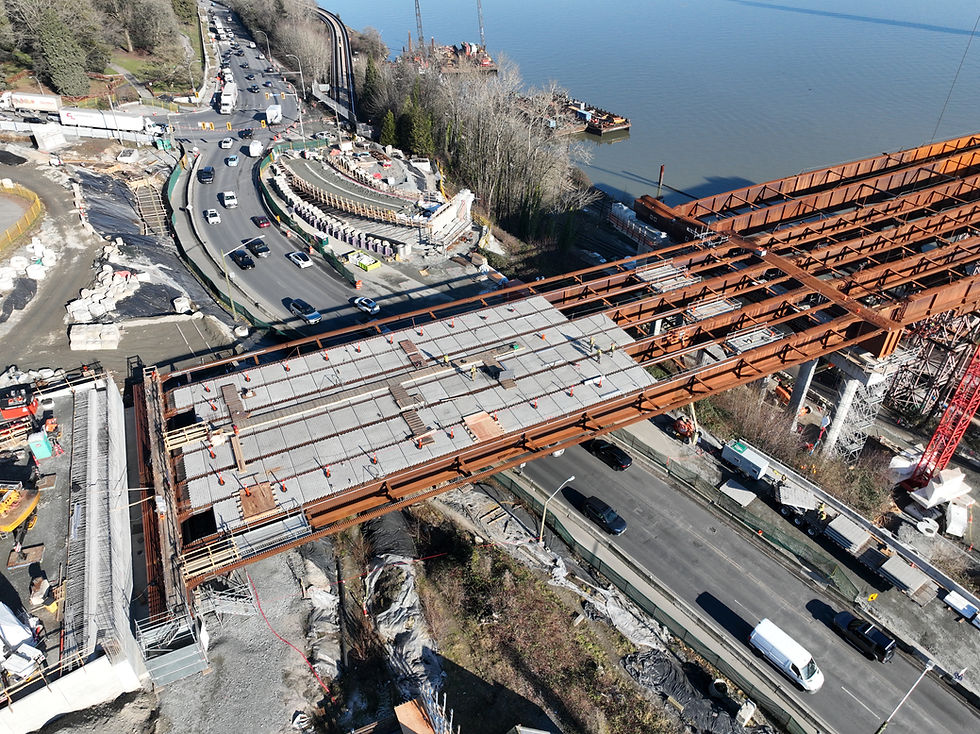
As part of the Province of British Columbia’s Pattullo Bridge Replacement Project, the stal̕əw̓asəm (Riverview) Bridge that replaced the Pattullo Bridge utilized thousands of concrete and pre-cast panels to build a new bridge that connects Surrey and New Westminster over the Fraser River. We spoke with Gerd Birkle, Senior Associate for a look at the process of creating and using panels for the bridge.
ENtuitive: Could you give our audience a quick overview of how the panels were created and used to build the bridge?
Gerd Birkle: The panels were built in a pre-cast yard we designed. Typically, a precast yard has a stressing bed where you pull pre-stressing cables, cast the concrete, and then let the cables go. That was the original design.
However, the decision was made to not have pre-stressed panels.
EN: How did that change the way panels were constructed?
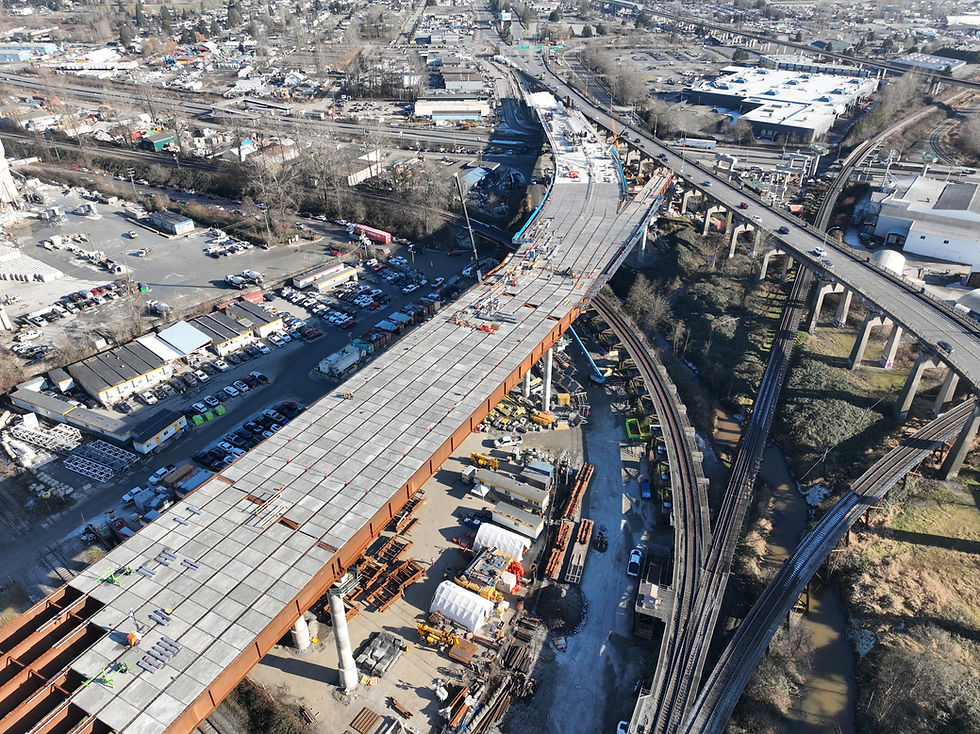
Gerd: The precast yard changed to have formwork that’s adjustable to the different panel sizes. You put your rebar on the formwork and then cast the panel with the rebar in the precast yard.
There’s four lifting points on each panel which are used to lift them up and stack them on a truck to then travel to site for installation.
EN: How many individual panels were made for this project?
Gerd: 500 different panels were made. And saying, “Here’s the design for panel 1A – let’s use panel 1A in these 10 different locations” was not an option.
The reason we were able to deliver the project, despite the complexity, is because our panels were modelled parametrically.
Parametric Panel Design
EN: So parametric panel design was crucial to project delivery – how did this process work?
Gerd: There were many inputs that the panel design had to accommodate, and each input was a parameter.
Size was a parameter. Adding a lifting hook was a parameter. Inserts for barriers was a parameter.
Inserts for hanging MEP (mechanical, electrical, and plumbing) off the bottom was a parameter. There was also a parameter for having a drain in the panel.
And when you start using all of these parameters, the design rules need to change. For example, adding a drain requires the reinforcement layout to be adjusted to suit.
Once you know all your parameters, you can have a rulebook that tells you how a parameter impacts the overall design of the panel. When the rulebook and parameters are set up, you can input the parameters and let the rulebook do the work.
For this project, I managed quality control for the panel design. Making sure that the rulebook worked for the parameters we put into the panel design – with a few exceptions that didn’t fit the rulebook.
Managing Design Complexity Efficiently
EN: It sounds like exceptions to the rulebook created challenges for panel fabrication.
Gerd: Yes, in terms of us putting it in a design drawing. Our primary role was to manage shop drawing production to make sure the contractor could follow our drawings and build the panels. We had to make sure that the designs would remain constructable despite the complexity of the parameters and how they fit into the rulebook.
EN: Managing the complexity of the panel drawings was a significant part of the construction design plan. You were making sure that the construction plan was optimized, specifically, for all the different panels.
Gerd: Correct. Initially, 10-20 different panels were proposed. Instead, 500 were made and optimized.
Every time a parameter was added, like the need to hang pipes off the bottom of a panel, the complexity of the design increased. Pipes don’t hang from the same location from each panel, so the line of the pipes and the lines where the panels go weren’t in parallel.
Parameters also included elements you need during construction. For example, if you want someone to be able to walk in an elevated section of the work site without being tied off, you need a barrier for safety. Now I need to put two inserts for a barrier in the panel before I cast the concrete. These inserts need to show up in the drawing and show up in the right locations.
But those barriers don’t follow the same profile of the bridge. So again, there is a parameter that changes: the location of these inserts. And when you have four or five different inserts, following a different set of rules, then the number of panels that are “special” increases significantly.
In fact, if we added just a few more parameters, every panel would have been individual and unique.
The reason we were successful is because the approach from day one was to do things parametrically. Instead of drawing one panel and copying it 100 times, we decided to draw the panels using parameters.
Intelligent Automation and Manual Adjustments
EN: It sounds like parametric design helped to automate panel drawings.
Gerd: Yes, however, sometimes the parameters aren’t easy to program. Sometimes it’s easier to make a quick, manual adjustment instead of relying on automation. So, we created a block within AutoCAD that allowed us to make some adjustments that didn’t come out of a rulebook.
When things get complicated, rules become so complex that it’s sometimes smarter to say, “I need an easy way to make my adjustment if the rulebook cannot capture it.”
It was a saving grace: we had rules for a lot of the panel parameters, and when the rules became too complex, we found a way to create blocks in AutoCAD that allowed us to put the parameters in directly, without a rulebook, by hand.
The reason why we successfully adapted to significant changes in scope during the project was our decision from day one to adopt a parametric design process. Pivoting earlier on the project to drawing the panels using parameters allowed our team to rapidly adapt to increasingly complex design requirements.
Connect with Entuitive to learn more about bridge construction and engineering.