
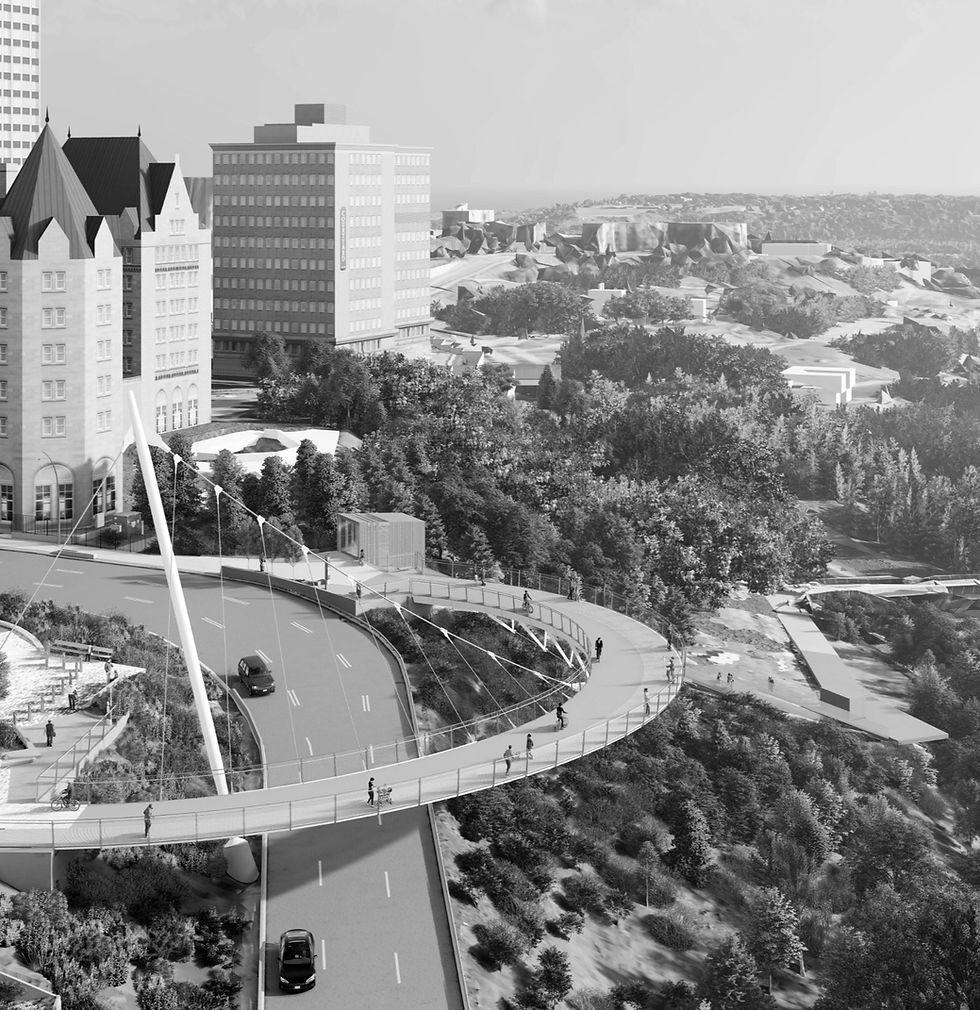
stal̕əw̓asəm (Riverview) Bridge Prefab Panels: Harnessing Complex Parametric Design
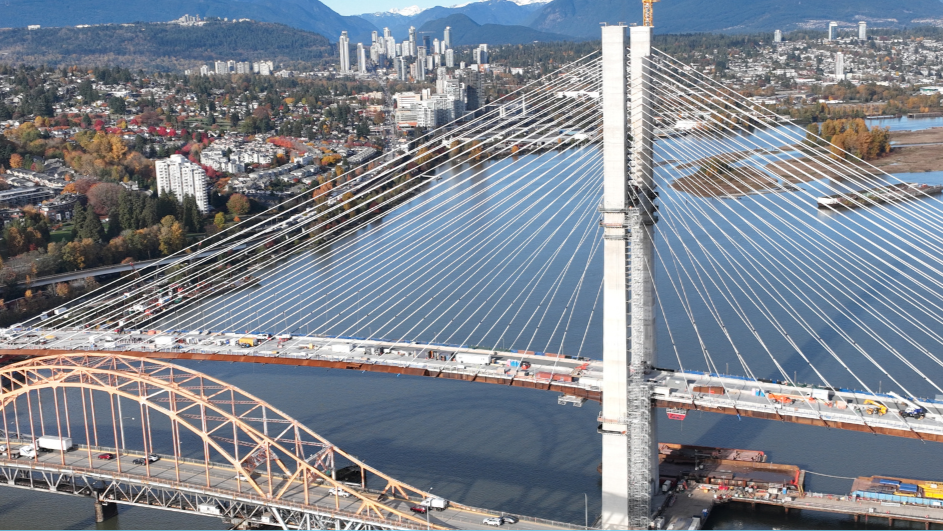
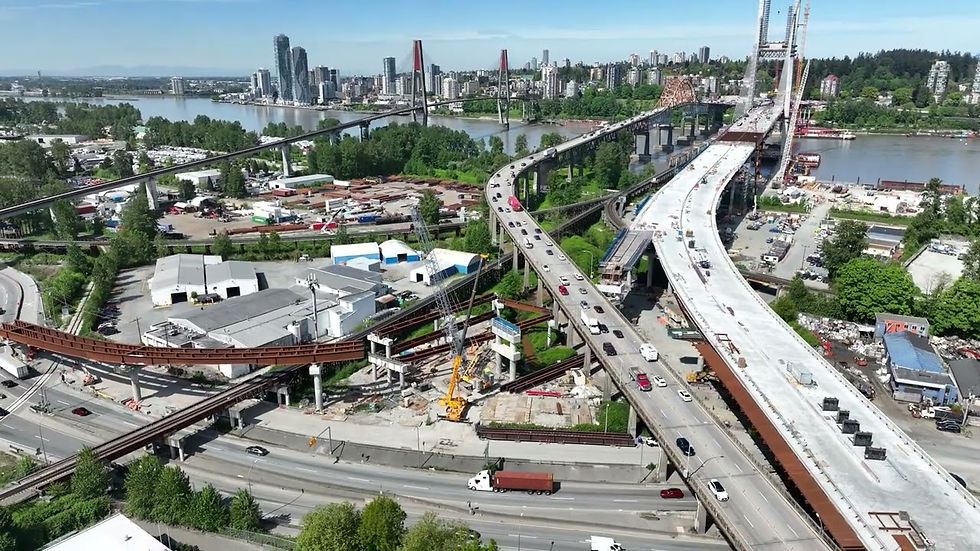
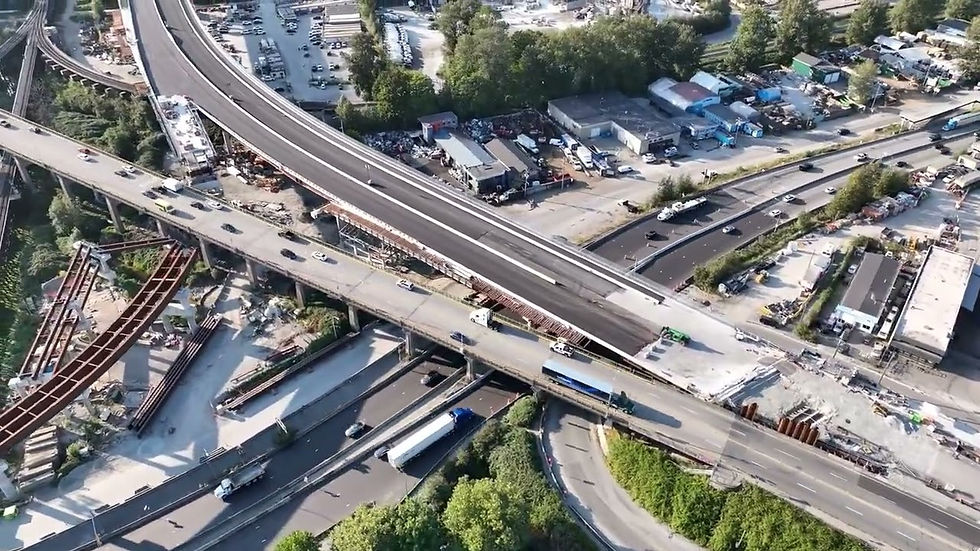
The new stal̕əw̓asəm Bridge required more than 3,000 multi-ton, prefabricated panels to construct a 1.2-kilometer arterial road above the Fraser River. Showcasing a prominent 167-metre tower, the stal̕əw̓asəm Bridge connects Surrey and New Westminster, replacing the almost 90-year-old Pattullo Bridge crossing which is now being deconstructed.
The bridge opened in December 2025. During construction (2020 to 2025), this critical bridge replacement was among the largest infrastructure projects in Canada, with a budget of $1.637 billion.
Managing the complexity of thousands of prefabricated concrete panels was crucial to the success of this project. Entuitive’s team of construction engineering specialists, led by Senior Associate Gerd Birkle, implemented the strategic use of contemporary technology to solve challenges that emerged during this massive, modular panelized project.
Change Demands Practical Adaptation
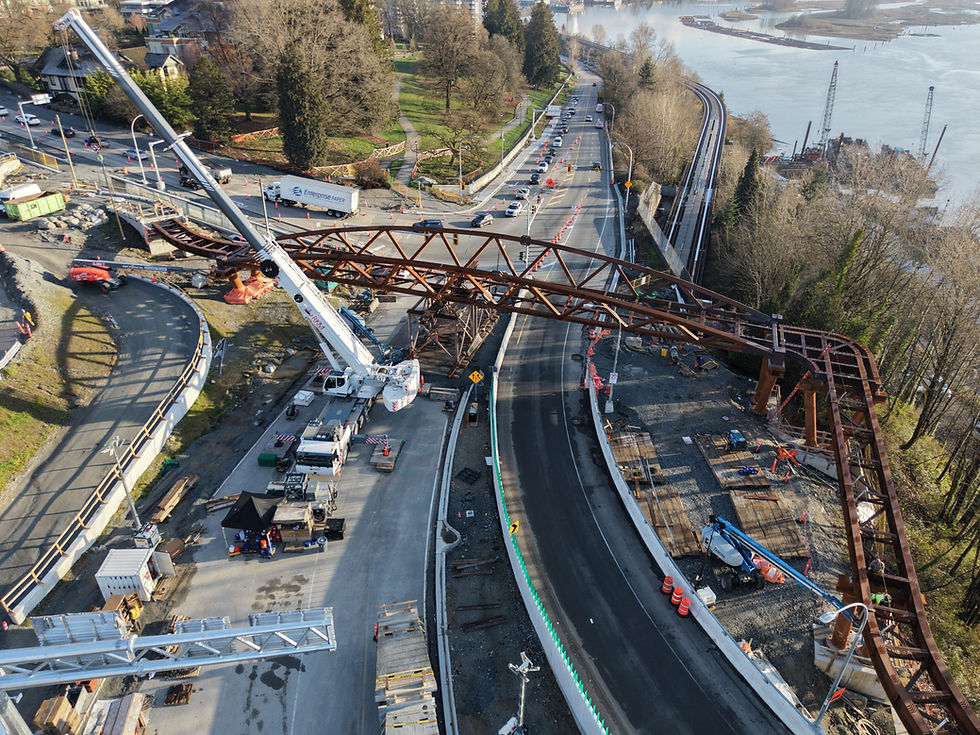
The thousands of concrete panels required to build the stal̕əw̓asəm Bridge were produced in a pre-cast yard designed by Entuitive’s team. Typically, these types of precast yards have a stressing bed where pre-stressing cables are pulled, with the concrete casted and cured prior to the release of the cables. However, this initial design decision changed when the choice was made to avoid the use of pre-stressed panels.
Instead, the precast yard changed to have formwork that’s adjustable to different panel sizes. For this method, the process involves first setting the formwork to the right dimensions. When the formwork is set, the reinforcement is placed, and then the concrete is cast, leading to a prefabricated panel in the precast yard.
Each panel was created with four lifting points. A spreader beam was designed by Entuitive to eliminate horizontal forces from the lifting points and allow the logistics providers to safely stack the panels on a truck. The trucks moved the panels from the precast yard to the construction site, where they were installed in the prescribed place.
“For the stal̕əw̓asəm Bridge, our team initially believed we would be working with 15-20 different panel design types,” Gerd recalled. “Considering our initial expectations, it was remarkable that we ended up managing 500 different types of panels.”
Parametric Design Harnesses Project Complexity
“The reason we were able to deliver the project efficiently, and manage that higher amount of different panel types despite the complexity, was because of our decision to utilize parametric design modelling for the panels,” Gerd explained.
The number of panel types increased the number of inputs that our panel design process had to accommodate. Each input was a design parameter. Some examples of the input parameters included:
The size and dimensions of the panel.
Adding a lifting hook to the panel.
Adding inserts for hanging MEP (mechanical, electrical, and plumbing) off the bottom of the panel.
Adding a drain in some panels.
Integrating inserts for safety barriers into many panels.
When additional parameters entered the equation, the design rules for the panels needed to change. For example, if a panel required a drain, then the rebar had to be moved within the panel to accommodate the drain location. After all the design parameters were understood, a rulebook was created to describe the impact of individual parameters on the overall design of the panel.
Setting up the rulebook and the input parameters enabled the use of parametric design. This provided the ability to input the parameters and let the rulebook do the work, instead of manually adjusting the panel design according to each parameter.
Quality control for the panel designs was another key aspect of ensuring accurate, constructable design drawings that fabricators needed to produce for each panel. It was essential to make sure that the rulebook worked for a significant majority of parameters involved in the panel design, with a few exceptions that couldn’t efficiently be added to the rulebook.
“Parametric design was crucial to manage the complexity of the panel drawings,” Gerd said. “Instead of drawing one panel and changing it 100 times, we knew that drawing the panels using parameters and a rulebook would be far more efficient.”
Nonetheless, the exceptions to the rulebook created further challenges for panel fabrication. When a design scenario was beyond the capabilities of the rulebook that governed automated parametric design, Entuitive had to establish manual control over the process.
Balancing Automation with Human Intelligence
Some parameters weren’t feasible to be incorporated via a rulebook. In this scenario, a quick, manual adjustment instead of relying on automation was the best course of action.
“In this complex situation, the rules become so complicated that it’s sometimes smarter to say, ‘I don’t care about this being fully automated, I need an easy way to make my adjustment if the rulebook cannot capture it,’” Gerd remarked. “So, we created a block within AutoCAD that allowed us to make some adjustments that didn’t come out of a rulebook.”
When Entuitive’s team enabled manual changes, managing parameters that couldn’t be automated was far less challenging. Given the many rules related to panel parameters, the ability to manually intervene turned into a saving grace. In cases where the rules became too complex to automate, directly managing the design parameters by hand was the optimized solution.
The Value of Experienced Foresight
Looking back at the half-decade process of building the stal̕əw̓asəm Bridge shows how foresight was critical to the timely completion of the project. Entuitive’s decision to adopt a parametric design and drafting process allowed the team to adapt to significant changes in scope and complexity.
Pivoting earlier in the project to drawing the panels using parameters eased the burden of managing complex design requirements via intelligent automation. With the amount of different panel types created, if just a few more design inputs were added, every panel would have been individually unique.
Certainly, the project would also have been successful if parametric design was utilized later in the schedule. However, experience-based foresight compelled beneficial results: deploying parametric design and automation as soon as possible resulted in significant cost and time benefits from the beginning.