


Phased Approach Drives Early Delivery of Gardiner Expressway Rehabilitation
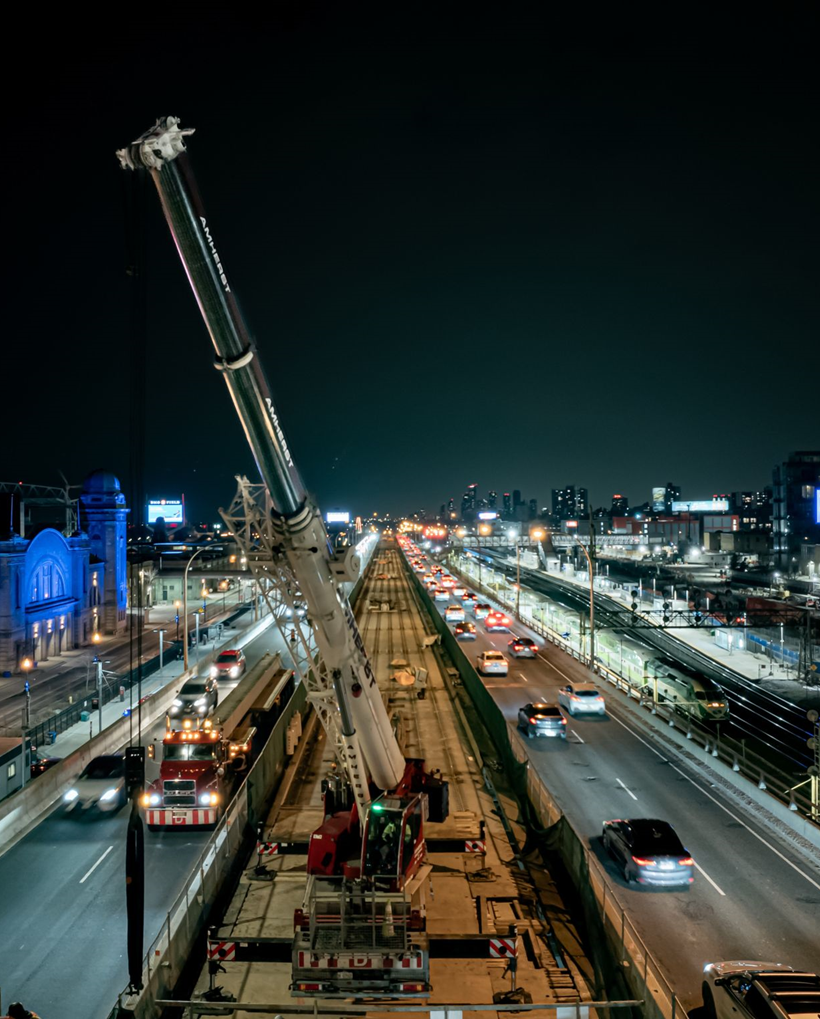
One of the five busiest highways in Canada, the Frederick G. Gardiner Expressway provides a path that connects drivers around the Greater Toronto Area to the southern edges of the downtown core. Originally opened to traffic in 1958, the City of Toronto is undertaking a strategic rehabilitation plan to ensure the continued functionality of this critical transportation infrastructure, necessitated by the effects of age, heavy daily usage, weather, and salt.
An estimated 140,000 vehicles traverse the Expressway on an average weekday, precluding the shutdown of the Gardiner during rehabilitation and presenting a significant challenge for the project team. For Section 2 of the Gardiner Expressway rehabilitation, Grascan Construction was retained as the Design-Builder. Torbridge Construction, a sub-contractor, engaged Entuitive’s construction engineering expertise to design solutions that would facilitate the sequential approach that kept four lanes open to traffic as construction took place on two lanes at a time.
Despite the complexity of rehabilitating heavily utilized infrastructure while operational, Section 2 of the Gardiner Expressway reopened all traffic lanes to full service well before the initially scheduled completion date of April 2027.
Modernizing the Structure of the Gardiner Expressway
Section 2 of the Gardiner Expressway rehabilitation project encompasses the elevated highway from east of Dufferin Street to Strachan Avenue. The majority of the spans in this area of the Gardiner were originally built with cast-in-place, concrete T-beams and integral bents. The existing structure also had in-span expansion joints at inflection points at every other span.
The design decisions for the original structure, dating back to 1960s concepts, aimed to achieve longer bridge span lengths. Current best practices avoid expansion joints when possible and avoid their use in-span, due to the impacts of salt-laden water and the associated deterioration of reinforced concrete structures.
Along with the replacement of the deck and supporting beams, the double-tee substructure also required rehabilitation and partial reconstruction. Entuitive collaborated with Grascan and Torbridge by providing our construction engineering services to integrate a solution that enabled delivery of the project objectives at an accelerated schedule.
Three-Stage Approach Accelerates Delivery
Temporary Struts Key to Streamlined Sequence
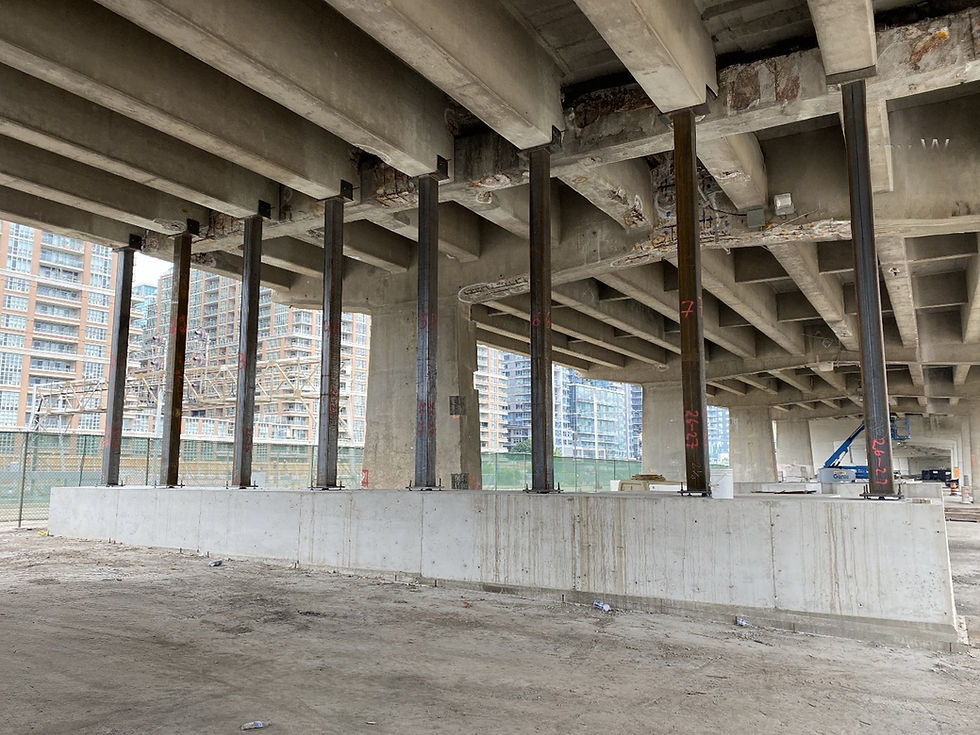
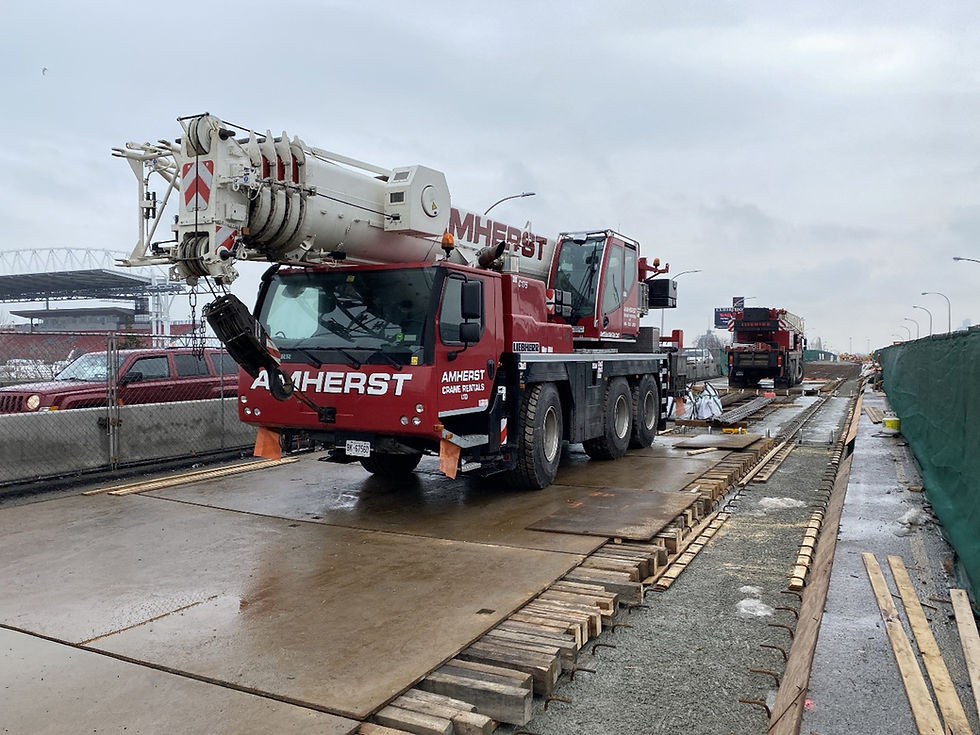
A three-stage construction plan was required by the City to renew Section 2 of the Expressway, with the complete demolition of one-third of the superstructure and bent caps at a time, followed by pouring new, deeper bent caps and installing precast, pre-tensioned box-girders. Grascan’s approach required temporary supports beneath the middle portion of old and replaced bent caps, strengthening these sections to withstand loading from construction work and to support live traffic.
The solution for temporary struts utilized a large diameter hollow structural section founded on a concrete and helical pile base at each of the bents. A jacking system was incorporated into the bottom of each of the temporary support struts to pre-load the system and give the ability to adjust and fine-tune the elevation of the roadway as more load was added to the superstructure.
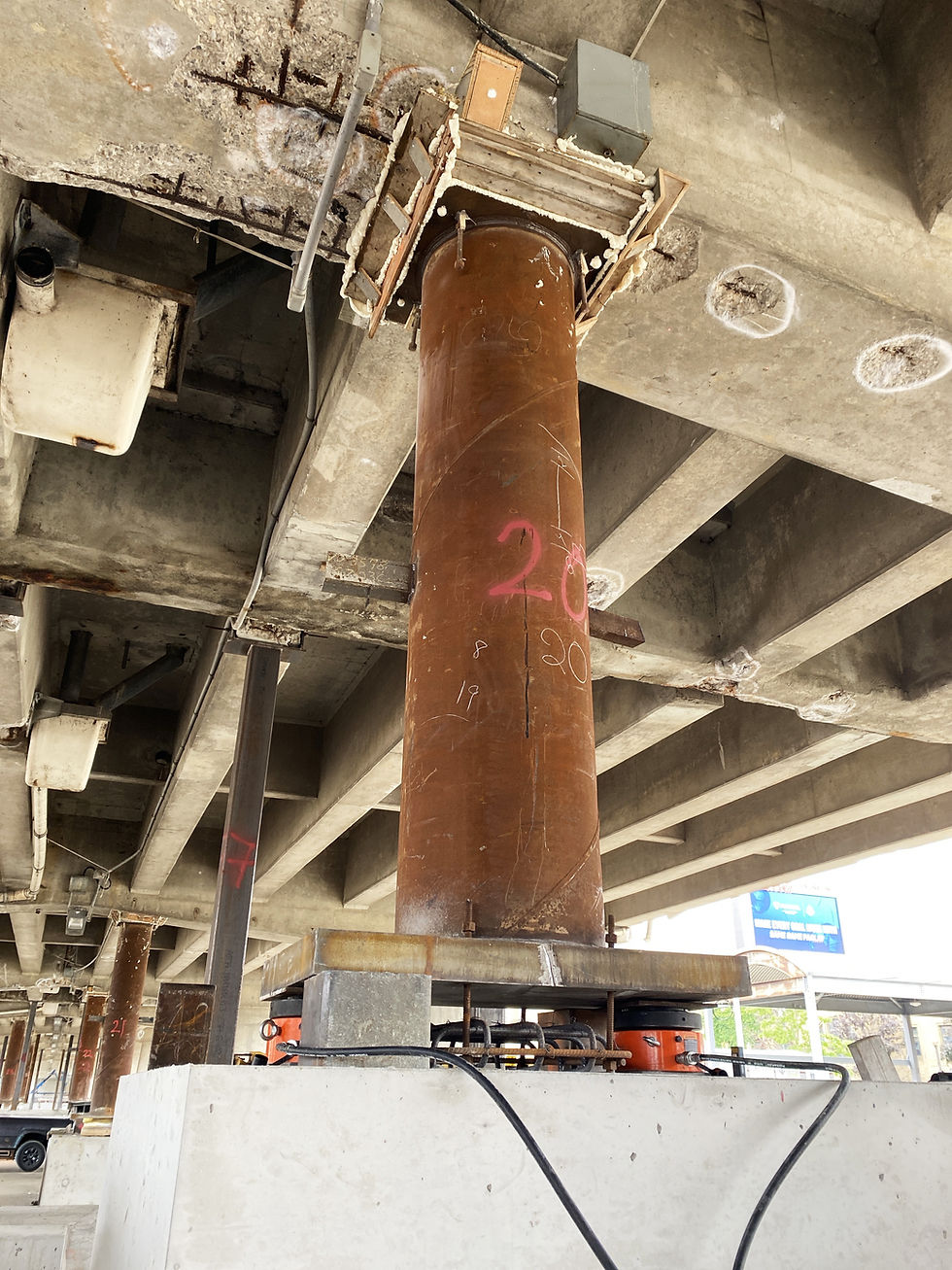
Some key challenges to this approach included:
Creating a support system that seamlessly works and considers the structural behaviour of each of the existing bent caps, new bent caps, and the concrete and helical pile temporary foundations.
Implementing a support system that would withstand gravity loads from self-weight and traffic, and is fully compliant with the imposed deformations of the superstructure through all of the construction stages where the supports were engaged.
Using simple concepts to accomplish design criteria across all 24 pier locations, with the ability to easily modify the support for each bent with the same materials used for both the old and new caps.
Adapting the temporary supports at each of the 24 pier locations, increasing in vertical elevation from west to east along the Expressway. Each pier location featured different stiffness characteristics due to the varying height of struts, depth of foundations, and supporting soil types, increasing the challenge of ensuring that the temporary supports behaved similarly across all locations.
Successfully addressing these challenges was integral to realizing the benefits of a three-stage approach. Once the first third of the Gardiner Expressway section was replaced, the temporary structures were quickly adapted to the adjacent temporary foundation sites, enabling support for the new bent caps.
This structural design concept and sequence was intentionally minimalistic, without sacrificing performance, resulting in an easy-to-implement solution for all bents. The amount of instruction that had to be provided to construction foremen and jacking operators was significantly reduced. Simplified procedures enabled consistency and lowered the likelihood of mistakes by avoiding complex connection details, utilizing readily available materials, and establishing repeatable processes.
The Value of Efficient Infrastructure Development
Initially expected to be ready by April 2027, Section 2 of the Gardiner Expressway re-opened all six lanes to full service on October 27, 2025. The Government of Ontario estimates that the province’s economy will save approximately $273 million by easing traffic congestion and lifting people out of gridlock sooner than initially proposed. Early completion also supports the spike in traffic during FIFA 2026 matches hosted in Toronto. The completion of the Gardiner rehabilitation is expected to save commuters up to 22 minutes per trip.
“The Gardiner is vital to keeping Toronto moving,” said Mayor Olivia Chow. “Thanks to our collaboration to accelerate this critical rehabilitation work, we are tracking well ahead of schedule, which means less disruption for our residents, visitors and businesses.”
Entuitive’s construction engineering expertise simplified this complex rehabilitation, reduced the difficulty that on-site teams would experience, and contributed to the accelerated delivery of the project.