


Bridging Communities: The New Canada Drive Connection Over Highway 400
Updated: Oct 6
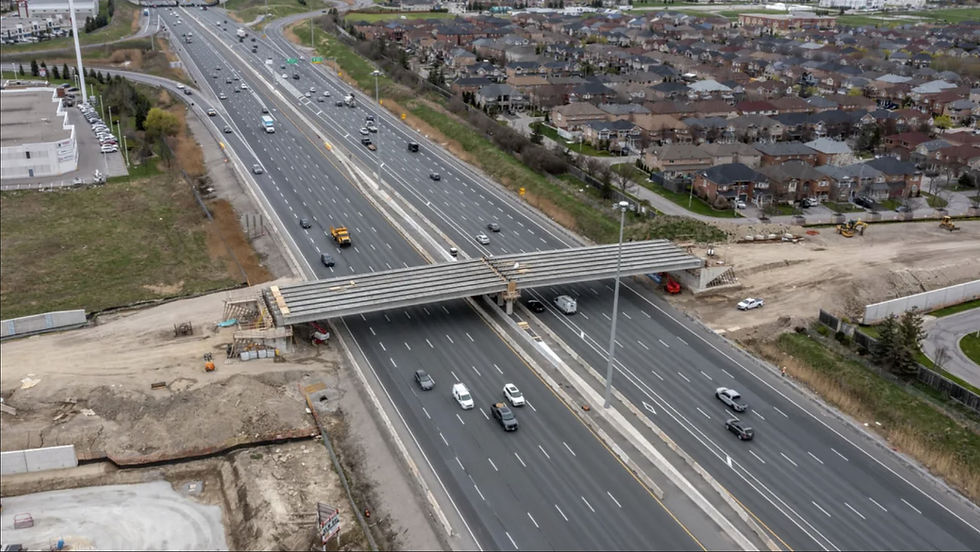
Located in Vaughan, Ontario, the Canada Drive Bridge is a new vehicular and active transportation bridge connecting communities across Highway 400. The City of Vaughan commissioned the bridge to enhance the City’s transportation network, enable easier travel to neighboring communities, and reduce traffic congestion. Entuitive’s previous success working with EllisDon and AECOM on the QEW Highway positioned us for another complex transportation project.
We had the opportunity to speak with Entuitive Associate David Hubbell, Ph.D., about the engineering behind this project.
ENtuitive: Thanks for taking the time to speak with us, David. What are some details of the Canada Drive Bridge?
David Hubbell: This bridge is a key link in the City of Vaughan’s nine-point action plan to fight traffic gridlock. A right-of-way for the eventual construction of the bridge was protected as the surrounding communities were developed.
It’s a design-build project led by EllisDon where we had the opportunity to team up with AECOM as a Structural Engineering subconsultant to complete the design.
EN: How did this collaboration begin?
David: This collaboration was developed over many years of working together on successful projects. We’ve worked with EllisDon as a construction engineering partner on many of their most complicated highway construction projects, and they were aware of our capability as a permanent structure designer on other design-build projects. EllisDon felt that this project would be a good fit with our proven expertise.
AECOM is a long-time permanent structure design partner with EllisDon, and we had all worked together on the QEW Credit River expansion and rehabilitation. For the QEW project, our surgical implementation of a partial demolition of the previous structure was integral to the overall reconstruction efforts. This close collaboration established trust on all sides and resulted in further partnerships between EllisDon, AECOM, and Entuitive.
EN: How did the structure design develop?
David: As is the norm for a design-build project, the RFP included a reference concept design to help communicate the owner’s expectations for the project. In this case, the reference design was for a steel box-girder bridge, which is a good choice in situations where a slender structure is beneficial. At this location, structure depth was critical as the approaches are short. The approach grades were unusually steep even with the shallow structure; the structure depth was therefore fixed.
We knew that a concrete bridge would provide benefits in terms of cost and scheduling, and after our preliminary design checks indicated it was feasible, even at the shallow depth, EllisDon elected to proceed with the recommended changes to the reference design.
EN: Could you describe the design a bit more? Was there anything different or unique?
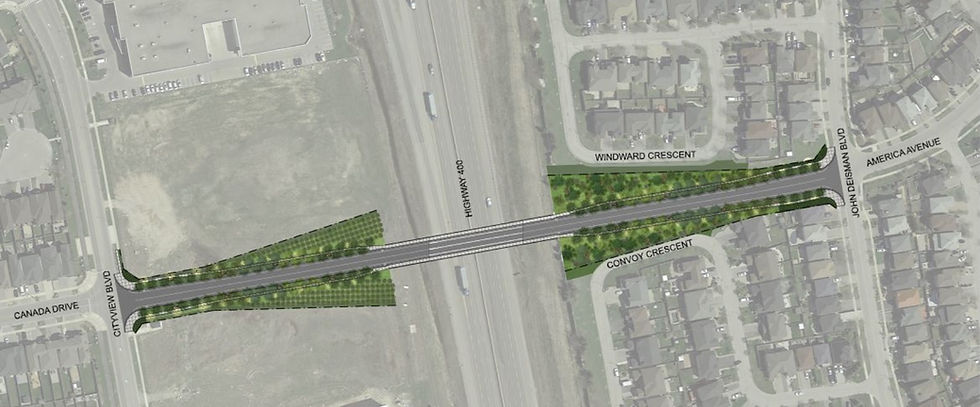
David: Definitely. It’s a precast concrete girder bridge with NU girders - NU referring to the standardized girder cross section shape which was developed at Nebraska University in the 1990s. There’s nothing unique about NU girders; they’re common in highway bridges across North America. What is unique about our design is that it uses post-tensioned NU girders, a practice that is common in other parts of the continent but is a first for the Ontario Ministry of Transportation (MTO).
We needed to use more shallow girders than is typical for a bridge with two 40-metre spans: 1.4 metres instead of a more typical 1.8 metre depth. It might not seem like a lot, but the 0.4 metre difference is significant because the approaches on either side are short, and we needed to maintain a 5-metre clearance above the highway below. The post-tensioned girders allowed us to use shallower girders that fit within the available space.
EN: Can you explain some of the structural challenges that you needed to address?
David: The approach slopes are 7.5%, which is steeper than normal, so there was a very strong incentive to keep the superstructure as shallow as possible.
This bridge pushes the usual span-to-depth limits for NU girders. Predicting and controlling the stresses and long-term deflections became important. While it is not a code requirement, it is good practice to ensure that a bridge will maintain an upward camber throughout its service life. A visibly sagging bridge can cause concern for the public, even if there is no structural deficiency.
A carefully staged construction analysis was required to account for the creep and shrinkage of the concrete and the relaxation of the prestressing strands, and to assess bridge deflection over time, ensuring the MTO’s criteria were met.
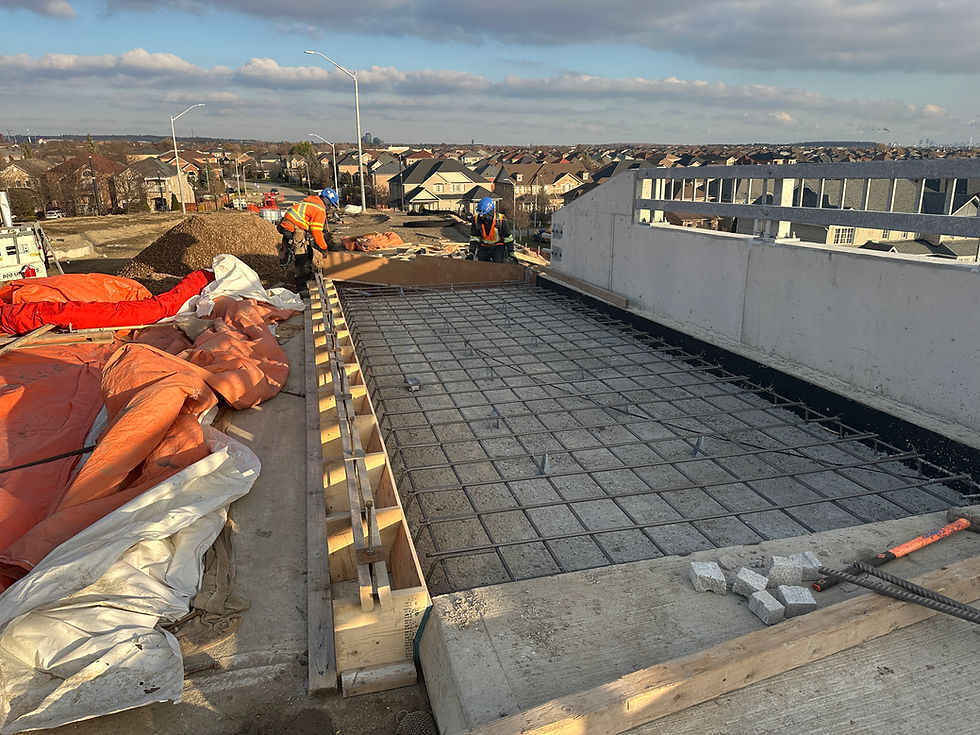
Since the bridge was the first post-tensioned NU girder bridge in Ontario, producing the girders would also be a first for the fabricator. As such, we worked with the fabricator and the MTO to develop the required modifications to the girder form, allowing for the inclusion of post-tensioning ducts in the girder web and providing an anchorage block at the girder ends.
EN: These are fairly major changes from the reference concept. How well were they received by the owner?
David: The City of Vaughan, the MTO, and Hatch - the owner’s technical representative - all engaged in a collaborative manner. These major changes to the reference concept were outside the expected range of options, but they fully met the specifications.
Hatch applied a high level of technical scrutiny on behalf of the City, an appropriate response to ensure these major changes were the best way forward. Understandably, we had to present additional documentation and address some outstanding criteria. When that information was provided and inspected, the major changes were embraced.
EN: What was your favourite part of the project?
David: I enjoyed working with the EllisDon and AECOM teams on this project. The construction process went well and the bridge structure was completed within the project’s demanding schedule. It was also rewarding to be part of introducing a new precast product to our market.
Now that there’s local precedent for their use, we’ve already engaged in multiple projects where we have considered post-tensioned NU1400 girders as a viable alternative. Successfully utilizing this design element for the Canada Drive Bridge paved the way to offering this valuable option to owners and clients we collaborate with now and in the future.